
- Corporate /
- One-third of candidates exceed poll spending caps: TIB

Staff Correspondent
Published:2026-02-09 20:08:09 BdST
13th National Parliamentary ElectionOne-third of candidates exceed poll spending caps: TIB
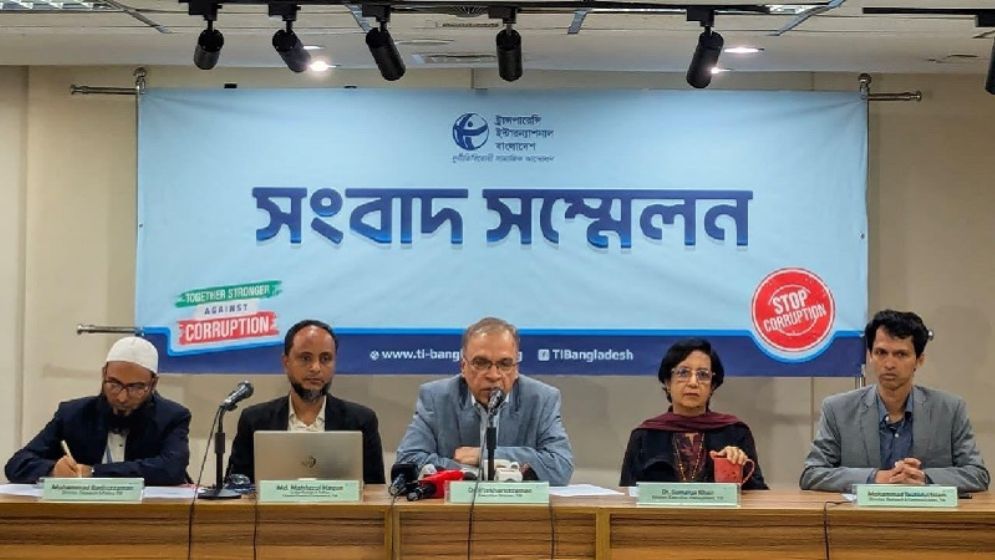
Transparency International Bangladesh (TIB) revealed on Sunday that more than one-third of election candidates in Bangladesh have violated campaign spending limits, while political competition is becoming increasingly confrontational and violent.
Presenting its findings from two new assessments at a press conference in Dhaka, TIB said 33.8% of candidates exceeded the official expenditure ceiling, spending an average of Tk1.19 crore each even before the formal campaign period ended.
The study covered campaign activities between 4 December 2025 and 1 February 2026.
TIB observed that potential candidates began campaigning well ahead of the permitted timeframe, openly breaching the Wall Writing and Posters (Control) Act, 2012, by placing promotional materials on walls, pillars, vehicles and other public structures.
Despite repeated directives from the Election Commission (EC) to remove such materials, 81.3% of candidates failed to comply.
In one case, a candidate allegedly threatened an executive magistrate over the phone after being instructed to remove campaign posters, highlighting what TIB described as growing disregard for electoral authority.
The organisation also noted attempts to influence the administration and public statements by political leaders that appeared to pressure officials to act in favour of specific parties.
Under a revised framework adopted by the EC in December, candidates were allowed to spend Tk25 lakh or Tk10 per voter, whichever was higher. This significantly raised the spending ceiling in large constituencies- for example, up to Tk75 lakh in Dhaka-19. However, TIB said actual spending in many cases far exceeded even these revised limits.
Alongside financial irregularities, TIB warned of a deteriorating pre-election environment, marked by rising violence, unhealthy competition and the growing use of money and religion as political tools.
Speaking at the press conference, TIB Executive Director Iftekharuzzaman said that although early signs of competition were relatively peaceful, the situation has worsened steadily.
“Conflicts between parties and alliances, internal disputes, power-driven rivalry and violence are all increasing,” he said.
He identified money, religion, muscle power, patriarchy and majoritarianism as Bangladesh’s core “political capital”, noting that the use of money and religion has expanded significantly in the current electoral cycle. He warned that this trend threatens the prospects for a free, fair and inclusive election.
TIB also expressed concern over the commission’s limited enforcement of electoral rules. Despite widespread violations of the code of conduct - both online and offline - the EC has appeared either unable or unwilling to take decisive action, creating risks to a level playing field for candidates and voters, the organisation said.
The report further highlighted failures within parts of the administration and law enforcement agencies to ensure a neutral and secure election environment.
TIB noted instances of inactivity, irregularities and lack of impartiality among officials involved in election management.
On political inclusion, Iftekharuzzaman criticised parties for failing to meet the requirement to nominate at least 5% women candidates, calling the absence of female nominees across most parties “deeply disappointing” and “a troubling signal for democratic representation”.
TIB concluded that unless campaign finance rules, political behaviour and institutional accountability improve urgently, the credibility of the election process - and public trust in democratic governance - will remain at serious risk.
Unauthorized use or reproduction of The Finance Today content for commercial purposes is strictly prohibited.