
- Business /
- Govt eyes Japan investment in 98 sectors

Diplomatic Correspondent
Published:2026-02-10 13:30:36 BdST
Govt eyes Japan investment in 98 sectors
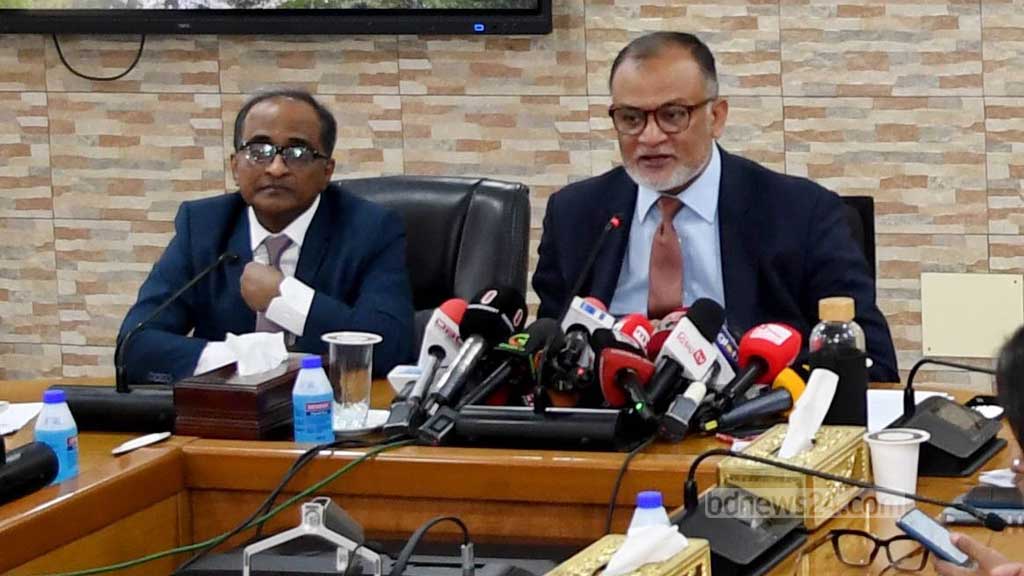
Bangladesh is seeking to attract large-scale Japanese investment across 98 service sectors under a newly signed Economic Partnership Agreement (EPA)
The commerce ministry described the deal as favourable, dismissing concerns over any immediate loss of government revenue.
Commerce Advisor Sheikh Bashir DUddin made these remarks at a press briefing on the EPA agreement with Japan at the Secretariat on Monday.
Bangladesh signed the EPA with Japan on Friday.
Under the agreement, Japan has granted duty-free access to 120 service sectors for Bangladesh. In return, Bangladesh has granted duty-free benefits to Japan in 98 service sectors.
Highlighting the potential for Bangladesh to benefit from this agreement, Bashir said: “Japan’s investment will create employment opportunities. Technology will be exchanged between the two countries.
“The country will also hire skilled manpower like doctors and engineers, as well as nurses and caregivers.”
About challenges and safeguards, he said: “The 1,070 products we have given duty-free access will bring in less than Tk 200 million a year in revenue.
“Japan has opened 120 service sectors for us. We have been able to open 98 service sectors, where previously only two -– five-star hotels and mobile phones -– were open.”
Commerce Secretary Mahbubur Rahman added, “Already, there is zero duty on many products like food products, cotton, and yarn.
“There is a 1 percent duty on machinery. Together, we have sent 1,039 of these [products]. So we are not losing any revenue immediately."
He said that under the EPA, Bangladesh will receive duty-free access to 7,379 products in Japan, calling it the country’s first such agreement with a developed nation and a long-time trading partner.
“We will give them access to some more products. These access rights will be phased in over five to 15 years.”
Highlighting the special provision for ready-made garments, he said: “We will continue to get duty-free access for clothing. Even after this agreement, we will be able to export by adding one step of value. We can import cloth, make garments, and export them.”
The secretary said the agreement was convenient for Bangladesh, as it offered benefits on easy terms and would help expand bilateral trade and attract Japanese investment.
“It is supposed to be tabled in the first session of the Japanese parliament and it will become effective only if it is approved there,” he said.
He also said, “There is no rush from our side because we are getting this benefit right now as an LDC country.”
The advisor said, “We have to connect with different economies through bilateral agreements.”
He added that the agreement has opened up the possibility of liberalising Bangladesh’s economy, expressing concern about “major challenges” if businessmen cannot increase their capacity to liberalise trade after graduating from LDC.
Unauthorized use or reproduction of The Finance Today content for commercial purposes is strictly prohibited.